



HYDRATION is the most fundamental factor in wellness
this has been, to date, largely overlooked.
Ensuring that your HYDRATION mechanisms are operating with high efficiency, and are supported by the correct intake of fluid, is the single most important step you can take to improve your wellness.
The issue is not how much fluid we intake, but how well the uptake of that fluid occurs.
NEW & IMPROVED Aqua Hydration Formulas for men & women
You will obtain best results using filtered WATER, still or sparkling mineral WATER. Some chemicals in tap WATER, notably chlorine and fluoride, can compromise HYDRATION in the body. In all drinks, you may vary the quantity and proportion of liquids to suit your taste.
The AQUA Formulas work very gently in the body. Improving HYDRATION takes time. Consider drinking 4 - 6 additional glasses of WATER daily depending on your lifestyle, exertion etc.
Proper hydration underpins wellness of body and mind .......... and we want that everyday to underpin a long and healthy life!
See this article recently released:
https://newatlas.com/health-wellbeing/drink-water-live-longer-hydration-aging-health
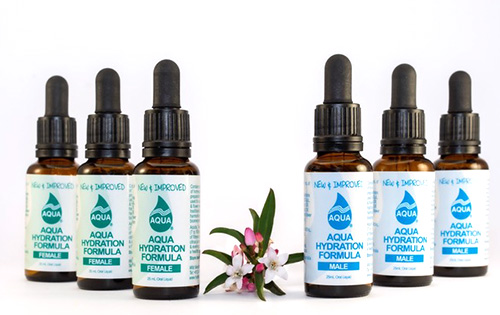
New & Improved Aqua’s are here at last!
Order your hydration support today!
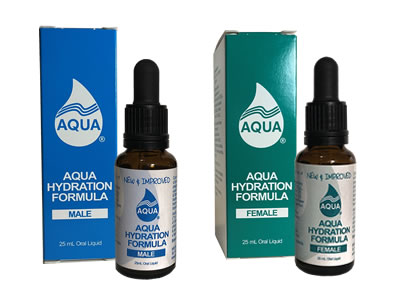
ORIGINAL AQUA'S UNAVAILABLE. PLEASE CONTACT US FOR MORE DETAILS USING OUR CONTACT FORM
NEW & IMPROVED AQUA'S AVAILABLE IN APRIL 2021
Go to our Blog page to find out more
ADD SUPERFOODS TO YOUR HYDRATION ROUTINE
Did you know that over 90% of Australians do not eat the recommended amount of fruit and vegetables every day.
We are excited to offer you a great organic Australian superfood product designed for Men and Women.
We believe proper hydration is the primary cornerstone to wellness and we also know that good nutrition is one of the most important steps to maintaining good health, vitality and strong immunity.
The Activated Nutrient Superfoods for Men and Women have been formulated by my colleague Dr Jaroslav Boublik ( who co formulated the Aqua’s). We love using them here to supercharge our health and we are now proud to be able to offer them to you at our online store.
Made 100% from organic Wholefoods (not synthetics) they are easier to digest and get benefit from fast! I call them my “income protection insurance"
Make them part of your daily routine today to boost your nutrition and wellbeing.
SEE PRODUCT PAGE
NEW PODCAST - INTERVIEW WITH JOHN COLEMAN ND
A diagnosis of Parkinson's Disease can be devastating because the understanding that most doctors and patients have is that the condition is degenerative with an expectation of worsening symptoms. In this episode you will meet John Coleman who through unbelievable personal adversity reversed his Parkinson's symptoms and went on to support over 3000 other people diagnosed with the same condition.
https://podcasts.apple.com/au/podcast/reverse-parkinsons-disease/id1654149965?i=1000616545269
***We at Wild Medicine wish to acknowledge the Traditional Custodians of Country throughout Australia, and their connections to land, sea and country. We pay our respects to their Elders past and present and extend our respect to all Aboriginal & Torres Strait Islander peoples today***
Aqua Hydration Formula Female 25mL
A synergistic blend of homoeopathic preparations traditionally used to support hydration & flower essences traditionally used to harmonize your bioenergetic field.
Aqua Hydration Formula Male 25mL
A synergistic blend of homoeopathic preparations traditionally used to support hydration & flower essences traditionally used to harmonize your bioenergetic field.
The Hydration Equation – Balancing the flow of water through life
Problems with profound dehydration as a marathon athlete led to neuroendrocinologist Jaroslav Boublik to investigate a herbal formula developed by natural health practitioner Leonie Hibbert. Success with this led to a research and development partnership that is now investigating a holistic scientific approach to cellular hydration at a fundamental level.
Proper hydration underpins wellness of body and mind .......... and we want that everyday to underpin a long and healthy life!